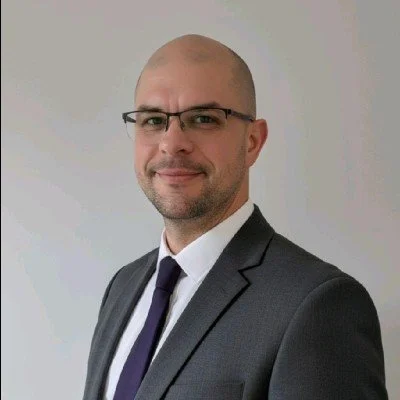
Tom Hudson
Independent technology advisor to UK businesses. I help MDs, COOs and CFOs make technology decisions on solid foundations instead of expensive assumptions.
Philosophy
Most businesses are trying to solve the wrong problem.
They want AI. They want the automation that will make the technology budget worth spending. That is a reasonable thing to want. The problem is they are looking at the output and ignoring everything that makes the output possible.
I have worked inside organisations where governance was non-negotiable and where a technology failure had consequences that went beyond a balance sheet. That experience taught me one thing above everything else. The technology is almost never the problem. The foundations are.
Dexlab is built on that belief. Not that AI is overhyped or that technology investment is a mistake. The opposite. Technology investment is one of the highest-leverage decisions a mid-market business can make. When the foundations are right.
Background
Where the experience comes from.
Enterprise architecture, AI governance and responsible adoption
Managed a £10m IT budget across one of the UK's leading NHS teaching trusts. A 3,000-strong specialist user base within an 11,000-staff estate. Every stakeholder. Every layer.
Legacy server migrations, elimination of technical debt, operational automation and a data-first digital strategy built for transformation and long-term scale. I founded an AI Community of Practice inside the NHS, built the governance framework and trained non-technical staff to use it compliantly.
"If I can do that in one of the most controlled environments in the UK, I can do it anywhere."
Cloud architecture and delivery for government clients
Full commercial and technical lifecycle management for public sector clients on AWS and Salesforce platforms. Legacy infrastructure migrations to cloud within strict security-cleared environments. G-Cloud procurement and service design. When security and compliance are non-negotiable, you build differently. That standard transfers to every client engagement.
CRM, data architecture and automation at scale
Volume is a stress test for every decision made before it. What holds and what breaks under pressure tells you more about the architecture than any audit. Most businesses do not find out their data structure was inadequate until they try to grow. By then it is expensive to fix.
Technology leadership in a regulated financial environment
Regulated industries do not tolerate ambiguity. Compliance requirements, audit trails and data obligations are non-negotiable. The discipline that comes from working inside that environment applies to any business facing increasing regulatory pressure on AI, data and information security.
End-to-end transformation for a specialist mid-market business
Not a blueprint applied from above. The existing operation mapped first, then rebuilt around how the business needs to run. The sequence matters more than the tools. This engagement is as close as it gets to the work Dexlab does now.
Technology strategy and large-scale change
Growth does not create technology problems. It reveals the ones that were already there. Across several UK businesses in high-growth phases, the pattern is consistent. The organisations that handle it well build the foundations before they need them.
Dexlab
There was nothing in the middle.
If you run a business turning over £1m to £100m and you need technology leadership, the options are limited. A large consultancy will sell you a senior partner, send in a junior to do the work, charge you for both and leave when the engagement ends. A freelance contractor will fix what you point them at but won't challenge the decision to point them there.
Neither is what most mid-market businesses actually need. They need someone who reads the whole picture, challenges the strategy before the budget is committed and stays accountable to outcomes. Not to a day rate. Not to a vendor relationship. To whether the problem gets fixed.
"Most big consultancies will get you on a call with a senior consultant to hard sell you, then send out a junior to follow a guide and collect the information. A senior reads it to you very convincingly. Then they leave. You just paid a fortune for a presentation. If all you needed was a presentation you would have already started."
Name
Named after my son.
Dexlab is named after Dexter. That is the whole reason it exists. Not as a lifestyle business. As something that has to work, that has to be worth the time it takes away from him and that has to be something he can one day look at and understand why it was worth building. That context shapes every decision about how the business runs and who we take on as a client.
Team
More than one person.
The advisory work is Tom's. The business runs on both of us.
All audit work, client engagements and advisory delivery. Every finding is Tom's. Every recommendation is Tom's. That is not a marketing claim. It is a commitment.
Client experience, outreach, scheduling and business operations. Rio keeps the business running so Tom stays focused on client work. You will hear from her. You are not being handed off.
Work
A few things to know before we speak.
I do not recommend before I understand.
The audit is not a precursor to a sales pitch. It is where I find out what is broken. Most of the time it is not what the client thought it was. The findings come first. Everything else follows from what is actually there.
The work does not get handed off.
What I present at the end of an audit I found myself. What I recommend in a sprint I stay accountable for. There is no junior in the background. You deal with one person from the audit to the final delivery.
You can take the findings and do nothing else.
The audit exists to give you a complete picture of where your business stands. If you take that away and act on it yourself, that is a good outcome. I would rather you fixed the problem than felt obliged to pay me to fix it.
The approach is consistent.
Build the system. Trust the process. Do the work. I lost 100kg in bodyweight using this logic. It applies to every client engagement. The foundations first. Everything else follows.